When One Property Has Five Kitchens
A single-restaurant owner has one menu, one team, one set of procedures. A multi-restaurant property has none of that simplicity.
Think of a resort with a poolside grill, a fine-dining room, an all-day cafe, a lobby bar, and 24-hour room service. Or a hospitality complex where two or three distinct restaurants share one site. Or a hotel where F&B spans the rooftop, the banquet hall, and in-room dining.
Each outlet has its own menu, its own kitchen, its own staff rota, and its own procedures. And in most properties, each outlet has quietly accumulated its own software too. Multiply five disconnected tools by five outlets and you get a back office that's impossible to run from one chair.
This is where multi-restaurant property management software earns its keep — not by adding another tool, but by collapsing the chaos into one platform that spans every outlet, every service zone, and every shift.
Why Multi-Outlet Properties Feel Tool Sprawl the Hardest
Every restaurant suffers from disconnected apps, but multi-restaurant properties suffer multiplicatively.
The math works against you
If a single venue runs five tools, a property with four outlets is theoretically running twenty subscriptions, twenty dashboards, and twenty configurations. Even when outlets share a tool, they're often set up as separate accounts that don't roll up. The owner who wants a single answer — "how did F&B do across the whole property last night?" — has to assemble it by hand.
Service zones make ordering harder, not optional
In a single restaurant, a waiter can see every table. On a resort property, guests are spread across poolside loungers, lawn cabanas, room balconies, and the beach — places staff can't easily monitor. Distributed seating isn't a nice-to-have for these venues; it's the core operating challenge. Guests need to order from where they are, and orders need to route to the right kitchen with the exact location attached.
Staff move between outlets
A server might cover the cafe in the morning and the bar at night. A chef might float between kitchens. When each outlet schedules in isolation, you get double-bookings, coverage gaps, and no property-wide view of labor. Scheduling for a multi-outlet property has to think across outlets, not within one.
Standards have to be consistent — and they never are
Brand consistency is the whole promise of a quality property. But when each outlet keeps its own procedures in its own binder or app, the poolside grill plates differently than the fine-dining room, the bar closes differently each night, and nobody can prove a procedure was followed. SOPs need to be authored centrally and executed everywhere.
What a Unified Platform Does Across Outlets
Consolidating a multi-restaurant property onto one platform changes the operating model in four concrete ways.
1. One menu engine, many menus
Instead of separate ordering tools per outlet, one platform hosts every menu — the grill, the cafe, the bar, room service — each with its own items, pricing, and service zones. Guests scan a QR code wherever they are; the right menu appears; the order routes to the right kitchen with the location attached. A head office can push a master menu or a price change across outlets at once, while still letting each outlet override what's specific to it.
2. Ordering that follows the guest, not the table
Because the platform understands service zones, a guest at a poolside lounger, a lawn cabana, or a hotel room orders exactly as easily as someone at a table — often through an AI concierge that knows the menu, handles dietary questions, and builds the cart in conversation. This is the difference-maker for distributed venues that standalone restaurant tools simply weren't designed for. (We cover the guest side in depth across our AI ordering guides.)
3. Scheduling that spans the whole property
One scheduling system across all outlets means a true property-wide view: who's working where, who's available to cover the bar tonight, where the coverage gaps are. Staff who work multiple outlets see one schedule, request time off once, and swap shifts without three separate group chats. Management sees labor against actual order volume — outlet by outlet and property-wide.
4. SOPs authored once, enforced everywhere
Standard operating procedures live in the same platform and roll out to every outlet. The head office writes the allergen protocol, the closing checklist, the room-service delivery standard once; every outlet's staff see the current version on their phone and acknowledge it. When a standard changes, it changes everywhere — and management can see compliance across the whole property, not outlet by outlet. (More on combining these in staff scheduling and SOPs in one app.)
The Payoff: One Property, One Source of Truth
The deepest benefit isn't any single feature — it's that orders, labor, and standards finally live in the same database.
That unlocks questions a fragmented stack can never answer:
- Which outlet drove the most revenue this weekend, and how was it staffed?
- Were we overstaffed at the cafe while the bar was drowning?
- Has every outlet acknowledged the new food-safety procedure?
- What's total F&B performance across the property, in one report?
For an owner or F&B director, that single pane of glass is the entire reason multi-outlet management software exists. It turns a property that felt like five separate businesses into one that's actually managed as one.
What to Look for in Multi-Restaurant Software
If you run a property with multiple outlets, evaluate platforms against the things that actually break at scale:
- Multi-outlet architecture — separate menus, kitchens, and staff per outlet, rolling up to one account
- Service-zone ordering — poolside, lawn, room, and cabana ordering, not just table QR codes
- Order routing — each order reaches the correct kitchen or bar with location attached
- Cross-outlet scheduling — staff and coverage managed property-wide, not per outlet
- Centralized SOPs — author once, enforce everywhere, with version-aware sign-off
- Consolidated reporting — property-wide analytics, plus per-outlet drill-down
- One bill — not a separate subscription multiplying across every outlet
The Bottom Line
Multi-restaurant properties don't have a software shortage — they have a software surplus, fragmented across outlets until nobody can see the whole picture. Every disconnected tool multiplies by the number of outlets, and the cost shows up as wasted subscriptions, double-booked staff, inconsistent standards, and guests who can't order from where they actually are.
One platform that handles ordering, scheduling, and SOPs across every outlet and service zone turns that surplus into a single source of truth — and turns a property that ran like five businesses into one you can actually manage from one screen.
If you're running F&B across multiple outlets, it's worth seeing the whole property in one platform. Explore the platform or start a free trial.
Related reading: All-in-one restaurant management software and the hidden cost of your restaurant software stack.
Related Articles
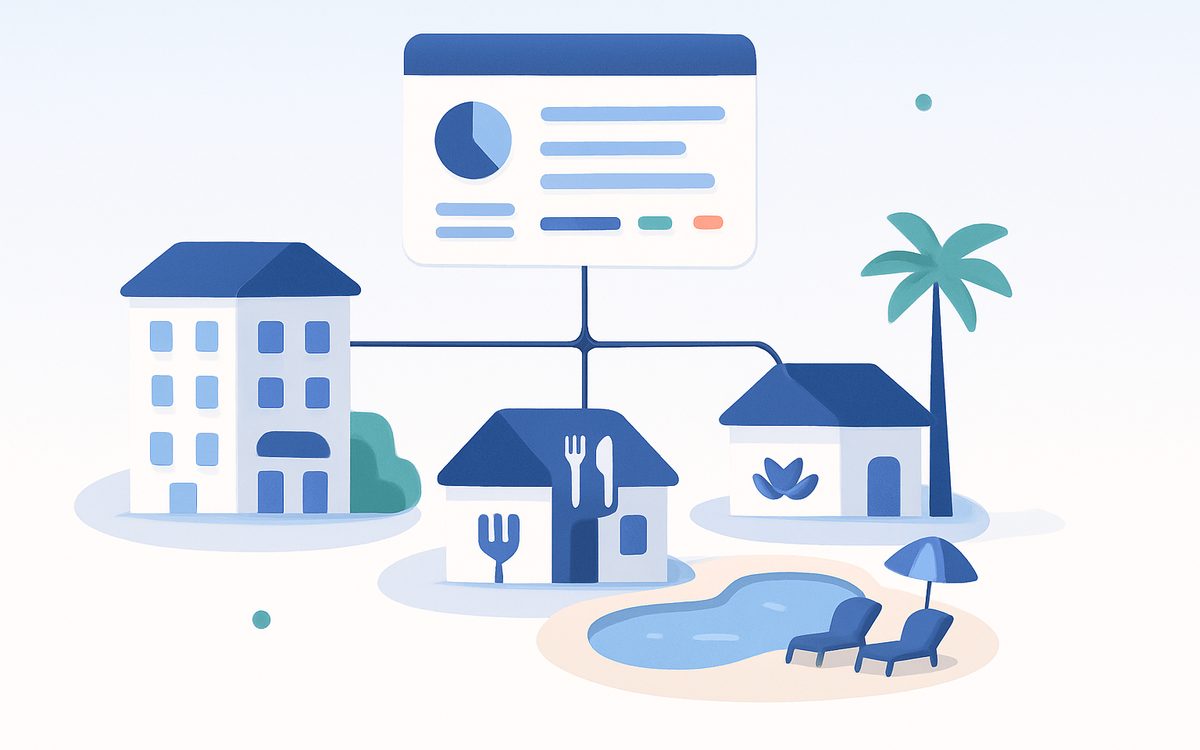
All-in-One Resort Management Software: Rooms, Restaurants, Spa and Staff on One Platform
A resort is a dozen businesses sharing a guest. Rooms, several restaurants, a spa, poolside and villa service, housekeeping and staff scattered across systems. Here is how one platform runs the whole property as one.
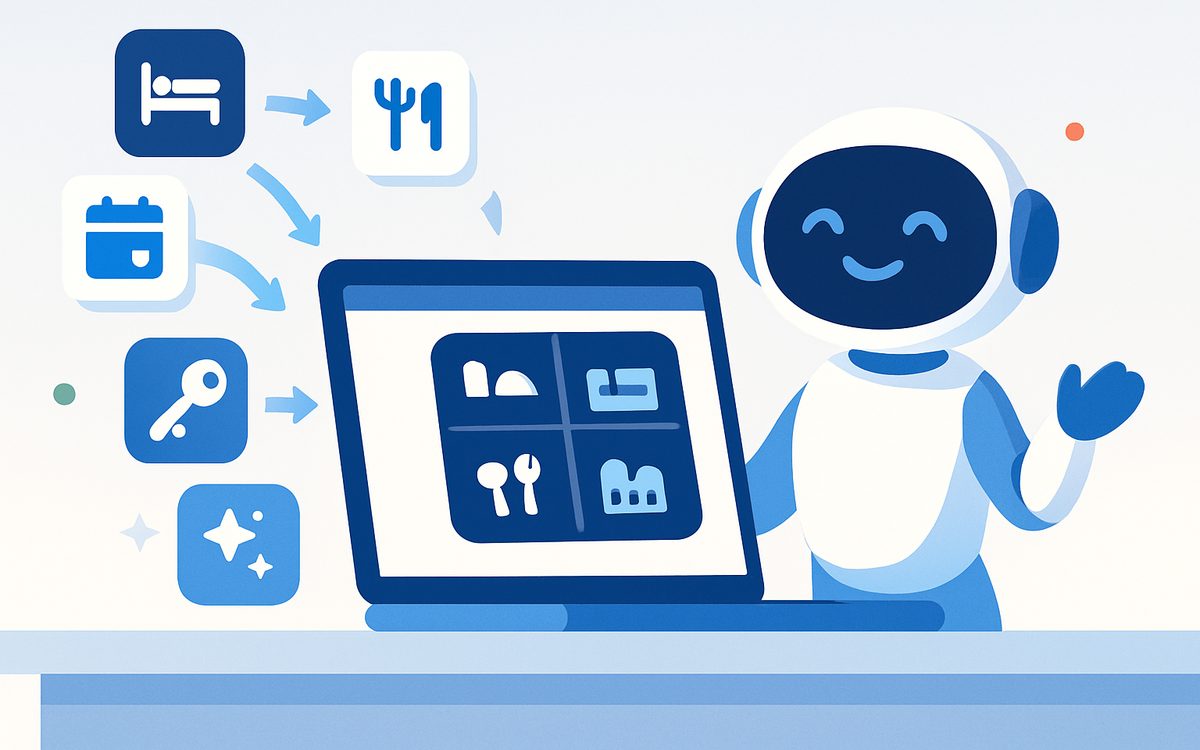
All-in-One Hotel Management Software: One Platform for Rooms, F&B and Staff (2026)
Most hotels run a PMS, a booking engine, a POS, a housekeeping app and a guest-messaging tool that barely talk to each other. Here is why an all-in-one platform for rooms, F&B and staff saves money, time and front-desk sanity.
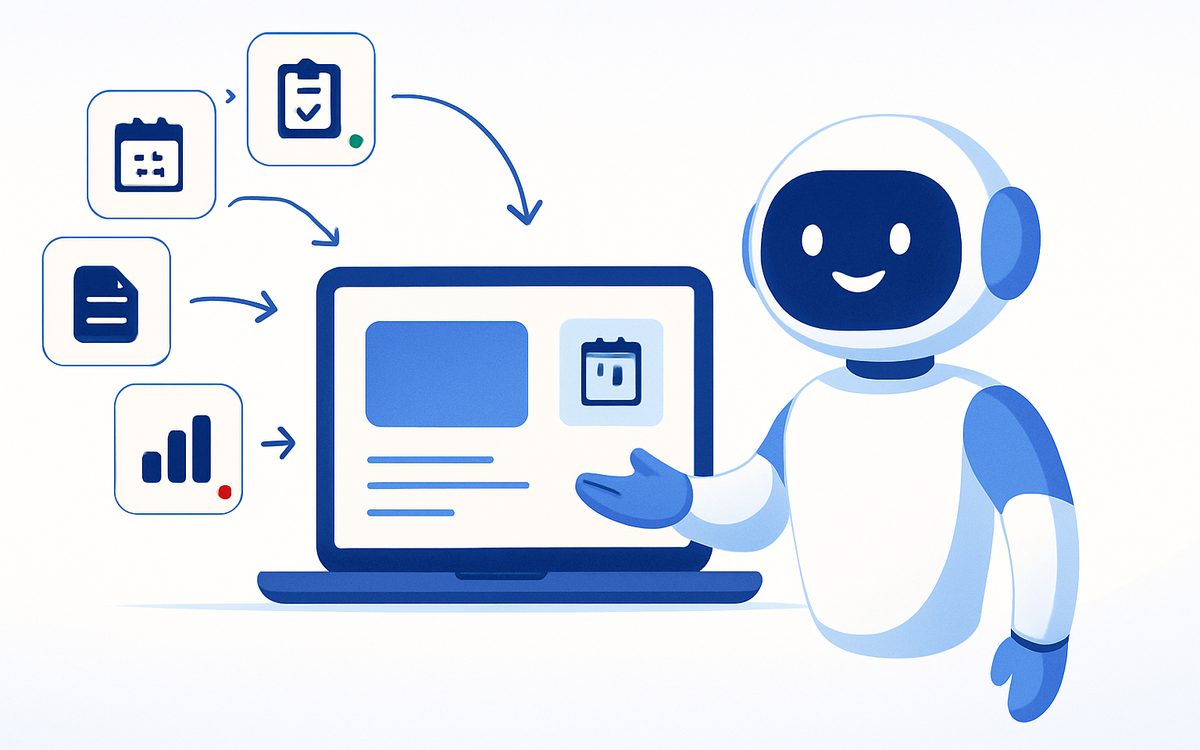
All-in-One Restaurant Management Software: Stop Paying for 5 Separate Tools (2026)
Most restaurants run on 5+ disconnected apps for ordering, scheduling, SOPs, and bookings. Here is why an all-in-one platform saves money, time, and sanity.