The 5-App Problem Nobody Talks About
Walk into the back office of almost any busy restaurant, hotel F&B operation, or resort today and you'll find the same thing: a tab graveyard.
One tab for the QR ordering system. Another for staff scheduling. A third for the SOP and training checklists. A fourth for table reservations. A fifth for the loyalty program. Maybe a sixth for the POS, and a spreadsheet holding the whole thing together with duct tape.
Each tool was bought to solve one real problem. None of them talk to each other. And every month, the owner pays five separate subscriptions, learns five separate dashboards, and trains every new hire on five separate logins.
This is tool sprawl, and it's quietly one of the most expensive problems in hospitality. The fix isn't another app. It's all-in-one restaurant management software — a single platform that runs ordering, scheduling, SOPs, bookings, and guest experience from one place.
What "All-in-One" Actually Means
The phrase gets thrown around loosely, so let's be precise. A genuinely all-in-one platform handles the full operating loop of a hospitality venue under one login and one bill:
- Guest-facing ordering — QR menus, AI concierge chat, room service, in-seat and poolside ordering
- Order and kitchen flow — orders routed to the right kitchen or bar, status tracking, KDS
- Staff scheduling — shifts, availability, time-off, shift swaps, labor visibility
- SOPs and training — standard operating procedures staff can read on their phone, with compliance sign-off
- Bookings and reservations — tables, rooms, and bookable services like spa or tours
- Guest experience — loyalty, feedback, promotions, and analytics
The test is simple: can a new menu item, a new staff member, or a new procedure flow through the whole system without anyone re-typing it into a second app? If yes, it's all-in-one. If no, it's a bundle of tools with a shared invoice.
Why Tool Sprawl Costs More Than You Think
The subscription fees are the obvious cost, but they're rarely the biggest one.
1. You pay five margins instead of one
Every standalone SaaS tool is priced to be profitable on its own. A scheduling app, an SOP app, a QR ordering app, and a reservations app each carry their own pricing floor. Bundle the same capabilities into one platform and you pay one margin, not five. For a mid-size venue, the difference between five point solutions and one platform is often the cost of a part-time employee.
2. Integration is a tax you pay forever
"It integrates with everything" sounds reassuring until an integration silently breaks at 8 PM on a Friday and orders stop reaching the kitchen. Every connection between two tools is a point of failure that someone has to monitor, debug, and re-authenticate. In an all-in-one system there's nothing to integrate — the data already lives in one place.
3. Your team pays in cognitive load
A waiter shouldn't need to remember which app holds the allergen SOP, which one shows their shift, and which one takes the order. Every extra login is friction, and friction during a dinner rush turns into mistakes. One platform means one thing to learn.
4. Your data is fragmented and useless
When ordering lives in one tool and scheduling in another, you can never answer the question that actually matters: "Were we overstaffed on Tuesday relative to sales?" All-in-one platforms put orders, labor, and bookings in the same database, so the analytics are real instead of guesswork stitched from CSV exports.
The New Operating Stack: Ordering + Scheduling + SOPs Together
For years, "restaurant software" meant a POS and maybe a QR menu. The frontier in 2026 is connecting the guest side and the operations side in one system.
Here's why that combination is so powerful:
Ordering data drives smarter scheduling
When your ordering and scheduling live together, the platform knows your real demand curve — not a manager's gut feel. You can staff to actual order volume by hour and day, instead of over-staffing slow shifts and drowning during peaks.
SOPs make the guest experience consistent
A digital menu is only as good as the team executing behind it. When standard operating procedures live in the same platform your staff already use for orders and shifts, compliance stops being a binder nobody opens. Staff read the SOP for plating, allergen handling, or room-service delivery on the same phone they use to pick up the next order — and managers can see who has acknowledged the latest version.
One source of truth for every location
Multi-restaurant properties and multi-outlet groups feel tool sprawl the hardest, because every disconnected app multiplies by the number of locations. An all-in-one platform lets a head office push a menu, a procedure, or a schedule template across every outlet at once. (We go deep on this in our guide to software for multi-restaurant properties.)
Where Standalone Tools Still Win — and Where They Don't
To be fair: best-of-breed point solutions exist for a reason. A dedicated enterprise scheduling suite or a standalone SOP audit platform will out-feature an all-in-one platform on its single specialty. If your only problem is workforce management for 2,000 hourly employees across 80 stores, a specialist tool may be the right call.
But most restaurants, hotels, bars, and resorts don't have one giant problem — they have a dozen medium-sized ones. For them, the marginal feature in a specialist tool is worth far less than the simplicity, lower cost, and unified data of one platform. The question isn't "which scheduling app is best?" It's "what's the simplest way to run my whole venue?"
This is especially true for complex, distributed venues — large cafes with indoor, outdoor, and terrace seating; resorts with poolside, lawn, and cabana service; properties with multiple restaurants on one site. These venues would otherwise need more tools, not fewer, just to cover all their service zones. All-in-one is the only model that scales down the complexity instead of adding to it.
How to Evaluate an All-in-One Platform
If you're considering consolidating, here's a practical checklist:
- Coverage — Does it genuinely handle ordering, scheduling, SOPs, and bookings, or does it claim "all-in-one" while quietly requiring add-ons for the basics?
- Single data model — Do orders, staff, and bookings live in one database, or are they separate modules with sync lag?
- Per-feature gating — Can you get scheduling and SOPs on a reasonable plan, or are they locked behind the top tier?
- Distributed-venue support — Can it route orders by zone (poolside, terrace, room) and manage multiple outlets under one account?
- Migration path — Can you move your existing menu, staff, and procedures in without weeks of manual re-entry?
- Transparent pricing — One predictable bill, or a base price plus five "essential" add-ons that recreate the sprawl you were trying to escape?
The Real ROI: Time, Not Just Money
Owners who consolidate consistently report the same thing: the subscription savings are nice, but the time savings are what they actually feel. No more reconciling five dashboards. No more onboarding a new server across five apps. No more wondering why the schedule says one thing and the orders say another.
That reclaimed time goes back into the only thing that grows a hospitality business — the guest experience. Your team spends less time fighting software and more time taking care of people.
The Bottom Line
Tool sprawl crept up on the industry one well-meaning subscription at a time. Each app solved a real problem, but the sum is more expensive, more fragile, and more confusing than any owner signed up for.
All-in-one restaurant management software reverses that. One platform for ordering, scheduling, SOPs, bookings, and guest experience means one bill, one login, one source of truth — and a team that spends its energy on hospitality instead of tab-switching.
If you're tired of being the human integration layer between five apps, it's worth seeing what running everything from one place feels like. Explore the full platform or start a free trial and consolidate your stack.
Want to dig deeper? Read why your restaurant doesn't need both 7shifts and Xenia, or run the numbers on the hidden cost of your restaurant software stack.
Related Articles
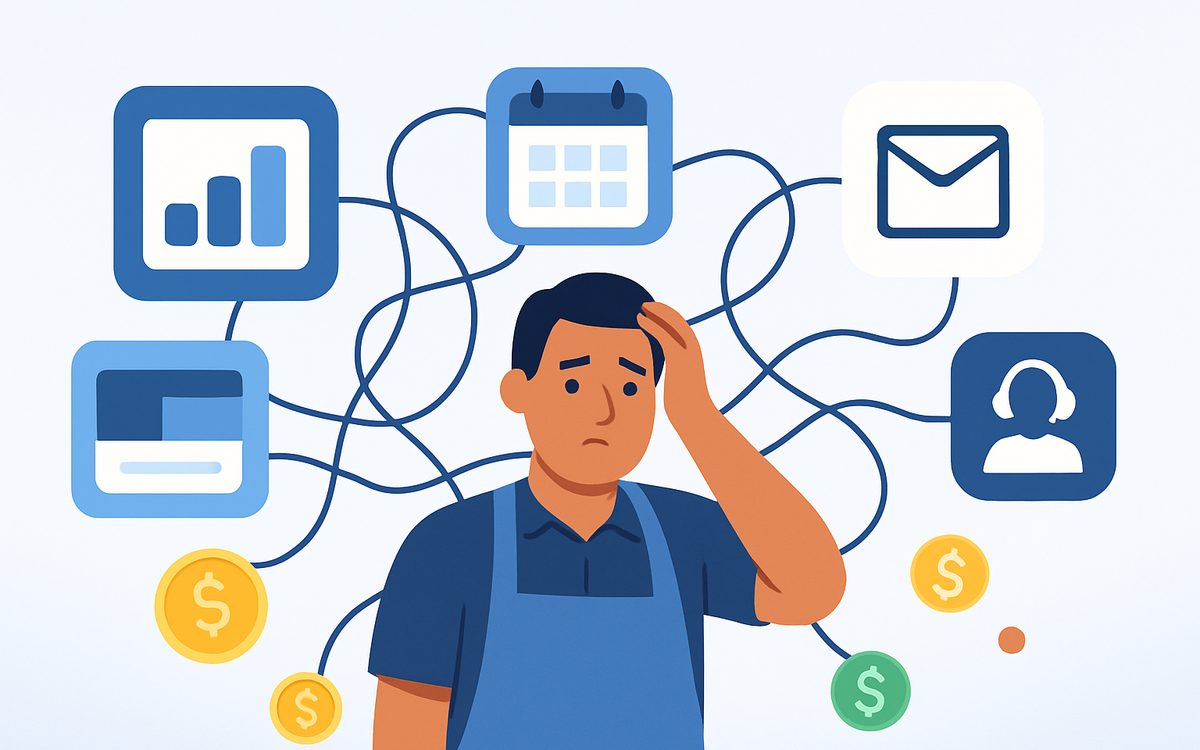
How Many Apps Does Your Restaurant Really Need? The Hidden Cost of Tool Sprawl
The average restaurant now runs 5-8 software subscriptions. Add up the fees, the lost time, and the broken integrations, and tool sprawl is costing you more than you think.
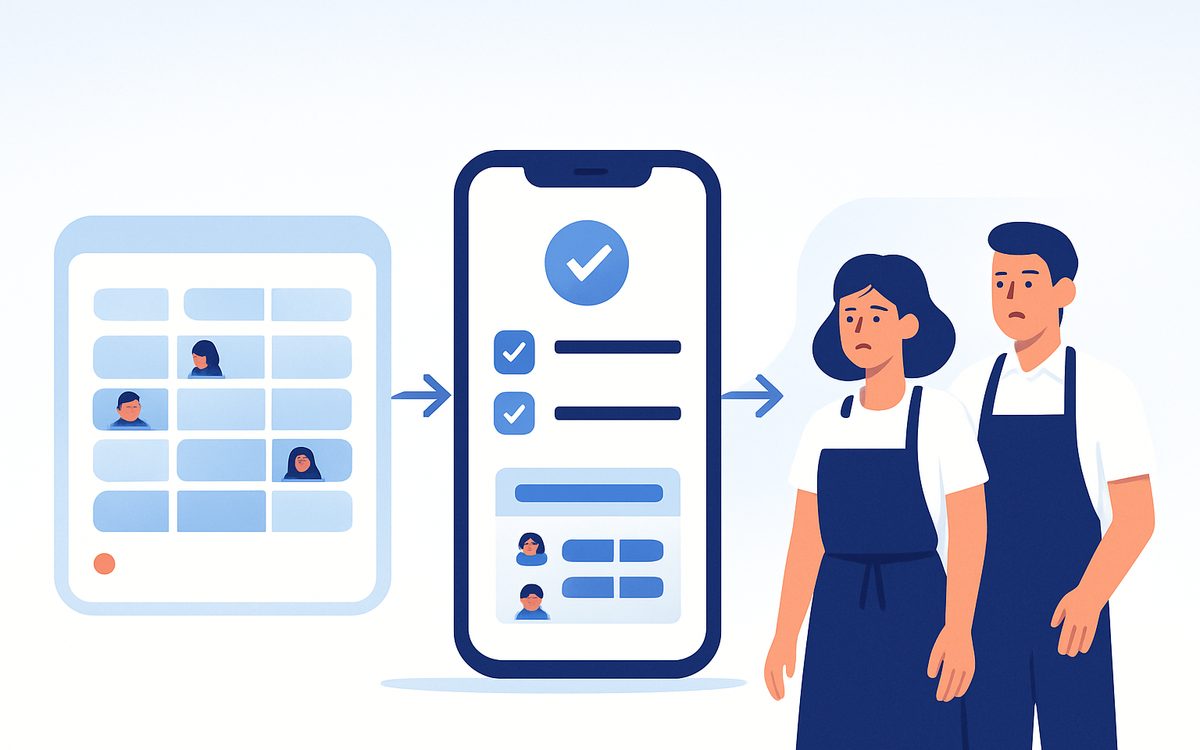
Staff Scheduling and SOP Software in One App: Why Restaurants Are Consolidating in 2026
Paying for one app to schedule staff and another for SOPs? Here is why putting scheduling and standard operating procedures in one platform changes how teams run.
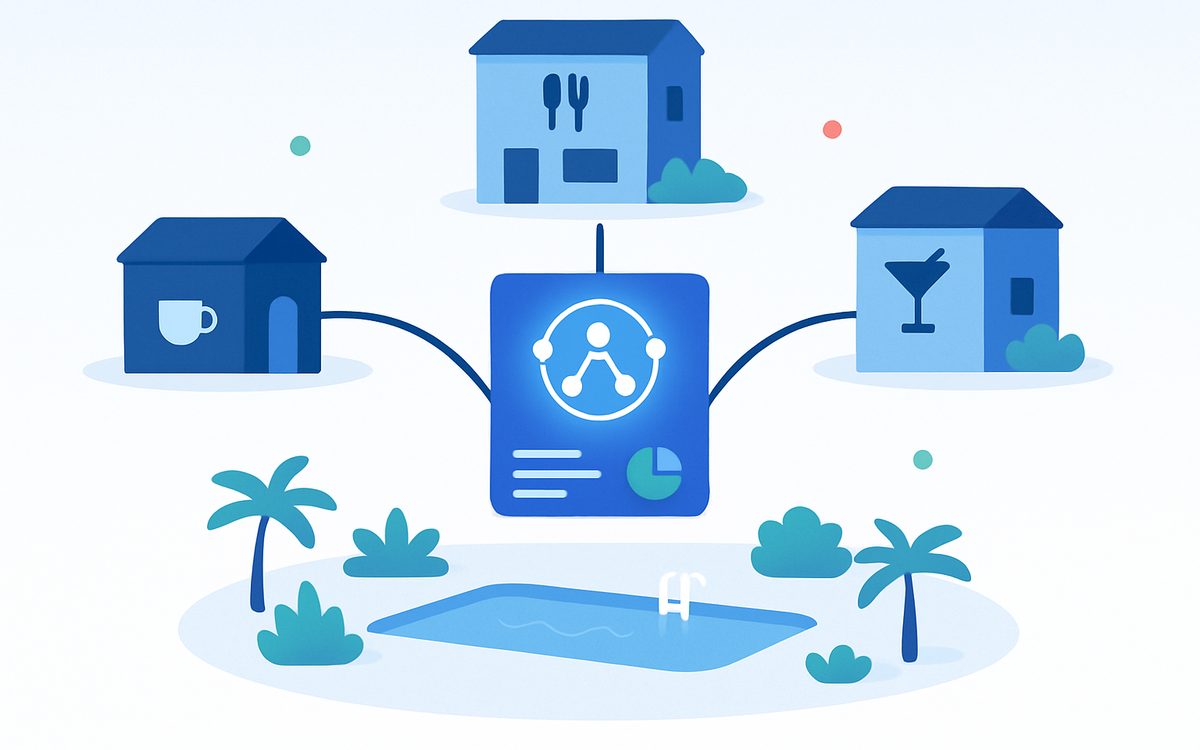
Running a Multi-Restaurant Property? One Platform for Ordering, Scheduling and SOPs
Resorts and hospitality complexes with multiple restaurants drown in disconnected tools. Here is how one platform unifies ordering, staff scheduling and SOPs across every outlet.