Every restaurateur in India knows what a captain is.
Not a waiter — a waiter carries plates. A captain is the senior floor staff who remembers your usual order, knows which chef is on duty, reads your table before you even sit down, and quietly adjusts service to match the mood. A captain is the difference between "food got served" and "the evening went perfectly."
The problem is: you can't give every table a captain. Not during Saturday dinner rush. Not at the poolside bar. Not at the banquet hall with 200 covers running simultaneously. A good captain covers 4 tables well, or 8 tables badly. Math decides the rest.
Then what happens? The service degrades exactly where hospitality matters most — at the edges of your floor plan, at the busy hours, at the places you invested in most.
What if the constraint disappeared?
The Thought Experiment
Imagine you could hire a captain for every single table. One for each chair, even. A captain who:
- Speaks the guest's preferred language (any of them)
- Has memorized your full menu, including today's specials and what's 86'd
- Knows every ingredient, every allergen, every cooking style, every possible substitution
- Remembers every past order the guest has placed at your restaurant
- Never gets tired, never takes a smoke break, never ignores the corner table
- Suggests dishes the guest will actually like — not just the ones with the highest margin
- Takes orders, places them with the kitchen, and confirms readiness without walking once
No payroll. No schedule. No turnover.
This is not a future. This is what happens when you put a QR code on every table and point it at an AI Captain.
The First Evening With It
A family of four sits down at a cafe on a Friday night.
The mother scans the code. The menu loads on her phone in two seconds — with photos, categories, dietary filters, today's chef recommendations. The AI Captain greets them by the restaurant's name, not a generic "hello."
The 7-year-old wants something "not spicy and not too veg-looking." The mother types exactly that. The AI Captain suggests three dishes — paneer makhani, veg au gratin, masala macaroni — with photos, in under a second. The kid picks one.
The father is diabetic. He asks if there's anything with less than 30 grams of carbs. The AI Captain filters the entire menu in real time and shows him six options. He orders grilled fish.
The grandmother is Jain. She types "Jain" in the chat. Every onion, garlic, and root-vegetable dish vanishes. She orders confidently.
The teenager doesn't want to read anything. She scrolls the specials grid, taps three items, and she's done.
All four orders hit the kitchen at the same time, with correct modifications, correct table number, correct seat assignment, and correct timing notes. The actual human captain — who is still on the floor — glances at his tablet and sees: Table 7 ordered, ETA 18 minutes, one dish needs special attention (nut allergy), they are 4 adults and 1 child.
He walks over with bread and water. He asks one question: "Anything else I can bring while you wait?"
That's the entire interaction. The AI Captain took the order. The human captain kept the hospitality.
Why This Is Different from "Digital Menus"
This is where most restaurateurs tune out, because they've heard the digital-menu pitch before.
Digital menus are a 2015 idea. Put the PDF on a QR code. Guests look at a static list. They wait for a waiter to take the order anyway. Nothing actually changes about service velocity, order accuracy, or upsell.
An AI Captain is not a menu. It is a role, performed in software, at the table.
The difference is that an AI Captain:
- Takes conversational input. "I want something light, no cheese, under 400 calories." A digital menu can't do that. A PDF definitely can't.
- Suggests, not just displays. It reads the guest's preferences, past visits, time of day, current table composition — and recommends dishes that actually fit.
- Modifies orders in real time. "Can you make this without capsicum?" The AI Captain sends that modification directly to the KDS with the right flag.
- Handles the upsell naturally. After the main course is ordered: "Would you like to add our signature dessert? 60% of guests who order the grilled fish also love the tiramisu." Conversational, not aggressive.
- Works in every language. Hindi, Tamil, Marathi, English, Arabic, Mandarin, French — all at once, on every table, without training a single staff member.
The Cascade Effect on Your Floor
Here's what actually shifts in your operation the week you deploy this:
Order-taking time collapses. The 6-to-10-minute gap between a guest sitting down and the kitchen receiving their order goes to under 60 seconds. Multiplied across a full service, that's an hour of kitchen time you get back every evening — without adding a single cook.
Order accuracy goes to ~99%. Misheard orders, forgotten modifications, wrong tables — these all originate in verbal communication. Remove the verbal step and the errors remove themselves.
Average order value rises 15–30%. Photos sell. Descriptions sell. Conversational prompts sell. A waiter doesn't remember to suggest the add-on — the AI Captain never forgets. Every guest gets the upsell every time, without it feeling pushy. And because every order is captured digitally, the follow-up keeps going — confirmations, and later win-back or birthday offers, can reach guests over WhatsApp automatically.
Staff time redistributes. Your human captains stop being order-takers and become hosts, problem-solvers, storytellers. The role of "captain" actually returns to what it was supposed to be before volume broke it.
Language barriers disappear. If you run a resort, a tourist-heavy cafe, or a destination venue — you already know this problem. A Korean family at a Goa restaurant no longer needs a waiter who speaks Korean. The AI Captain does.
Complaint rates drop. The vast majority of service complaints at restaurants are variations of "I waited too long" or "my order was wrong." Both of those are order-capture problems. Solve them and you've solved most of your one-star reviews.
Where This Matters Most
AI Captain is not equally valuable at every restaurant. Some venues will see marginal improvement. Others will see their economics fundamentally change.
If you will benefit enormously:
- Large cafes with outdoor seating, terrace zones, or sections your captains can't cover in real time
- Resorts with poolside dining, lawn areas, and room service running in parallel
- Multi-restaurant hotel complexes where a guest might want to order from any outlet
- Banquet halls, party venues, events with burst capacity
- Destinations serving international guests with mixed languages
- Any venue where "we could do more covers if we had more staff" is a recurring problem
If the improvement is smaller:
- Tiny 20-seat neighborhood spots where two captains already know every guest personally
- Fine-dining tasting-menu restaurants where the theatrical server interaction is the product
- Venues where the economics are not constrained by order velocity
Most operators are in the first category, whether they realize it or not.
The Uncomfortable Truth About Captain Apps
If you're a restaurant owner in India, you've probably been pitched "KOT apps" and "captain apps" by POS vendors for years. These are tablets your captain carries to the table, punches in orders, and prints a KOT slip in the kitchen.
They solved one problem (legibility) and created another: now your captain is staring at a tablet instead of at the guest.
An AI Captain removes the tablet. It removes the captain's data-entry role entirely. Your captain is free to do the actual job — read the room, create the moment, fix the problem, build the loyalty. The software handles the keystrokes.
This is not a replacement for your captain. It is an amplifier for your captain.
How to Start
The installation is not the hard part. Most venues are operational within a week:
- Upload your menu (or let the AI scan your existing printed menu)
- System generates a unique QR code per table, per zone, per outlet
- Print the tent cards, place them on tables
- Brief your floor staff on the new flow ("you don't need to take orders — handle the hospitality")
- Go live
The hard part is the mental shift. Letting go of the idea that a human has to take every order. Trusting that a well-designed AI Captain will handle the transactional part of service better than a tired captain at 9:47 PM on Saturday.
The operators who make that shift earlier will have a structural advantage over the ones who wait — the same way restaurants that adopted Zomato early had a structural advantage over the ones that resisted.
What's Next
A captain at every table has been the gold standard of hospitality for a hundred years. It was limited only by labor math.
The labor math just changed.
Curious what AI Captain looks like at your venue? We'll show you a live demo on your own menu in 15 minutes — book a slot here.
Related Articles
AI Ordering System for Restaurants: The Complete Guide for 2026
Learn how AI-powered ordering systems work, why restaurants are switching, and how to choose the right solution for your business.
How AI Improves Customer Experience at Restaurants & Cafes
Faster service, smarter recommendations, and zero wait times. Here's how restaurants and cafes are using AI to keep customers coming back.
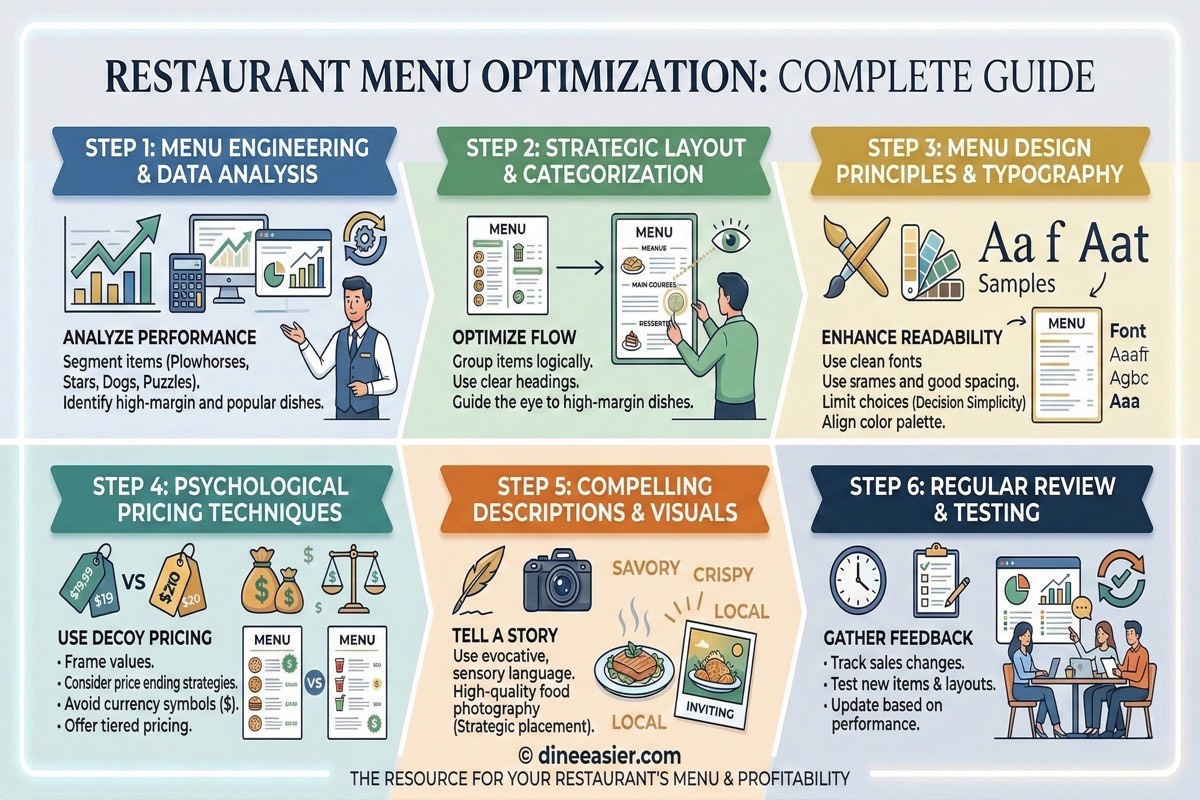
How AI Menu Recommendations Increase Average Order Value
AI restaurant menu recommendations consistently boost average order value by 10-20%. Learn how conversational upselling outperforms static menus and human servers.