The Customer Experience Problem
Every restaurant owner knows the frustration: you invest in great food, a beautiful space, and good staff — but customers still complain about wait times, wrong orders, and feeling rushed.
The problem isn't your team. It's the system. The traditional order-taking process creates bottlenecks that no amount of training can eliminate:
- Customers wait 5-10 minutes just to order
- Servers spend 60% of their time on mechanical tasks (taking orders, answering FAQs)
- Dietary questions get inconsistent answers depending on who's serving
- Peak hours mean everyone waits longer — exactly when experience matters most
AI doesn't fix bad food or rude service. But it eliminates the friction that prevents good restaurants from delivering great experiences.
Speed: The Silent Experience Killer
Most customers won't complain about a 10-minute wait to order. They just won't come back. Research shows that perceived wait time is the single biggest factor in casual dining satisfaction — ahead of food quality.
With AI-powered ordering:
- Order when ready: Customers scan the QR code and browse at their own pace. No waiting for a server to bring menus, then waiting again to order.
- Instant answers: "Is the pasta gluten-free?" gets answered in 2 seconds, not 3 minutes while the server checks with the kitchen.
- Parallel service: While one table is chatting with the AI about dietary options, your server is delivering food to another table and welcoming a new group at a third.
The result: customers feel like service is faster even though your staff count hasn't changed. They are simply spending their time on hospitality instead of order-taking.
Personalized Recommendations That Actually Work
"What do you recommend?" is the most common question servers hear. The answer usually depends on who's asking and who's serving.
An AI assistant provides consistently excellent recommendations because it knows your entire menu:
For the Undecided Customer
"I'm not sure what I want..."
AI: "What are you in the mood for? Something light, something hearty, or something to share? Our butter chicken is the most popular dish, and if you like spice, the Thai basil stir-fry is incredible."
For Dietary Needs
"I'm vegan, what can I eat here?"
AI instantly filters the entire menu, showing only vegan options with full ingredient details. No server can do this as accurately or quickly for every dietary combination.
For Groups
"We're 4 people, suggest a meal for us"
AI considers portion sizes, variety, and sharing dishes: "For 4, I'd suggest 2-3 starters to share — the spring rolls and hummus platter are great — then everyone picks a main. Our serves-2 biryani is perfect for sharing too."
For Regulars (Future)
As AI learns ordering patterns: "Welcome back! Your usual cold brew? We also just added a new chocolate croissant that pairs perfectly with it."
This isn't upselling. It's what great service looks like — and now every customer gets it, not just the ones lucky enough to get your best server on a good day.
Dietary Confidence
This is where AI creates the most meaningful experience improvement. Consider these real scenarios:
Scenario 1: A customer with a nut allergy asks the server which dishes are safe. The server thinks the pad thai is fine but isn't 100% sure about the sauce. They check with the kitchen, come back 5 minutes later. The customer orders something "safe" instead of what they actually wanted.
Scenario 2: Same customer scans the QR code, taps the allergen filter for "tree nuts," and instantly sees every safe dish on the menu with full ingredient lists. They confidently order the pad thai (which is indeed nut-free) and enjoy their meal.
For customers with dietary restrictions — and that's roughly 30% of all diners — AI transforms the experience from anxious to confident. That confidence translates directly into:
- Ordering more items (not just the "safe" choice)
- Higher satisfaction scores
- Repeat visits (they know they can eat safely at your place)
- Word-of-mouth referrals within dietary communities
The Menu Discovery Problem
Most customers look at 20-30% of your menu. They find their comfort zone and stick to it. This means:
- Your amazing new specials go unnoticed
- High-margin items buried on page 3 never get ordered
- Seasonal dishes get lost in a long menu
AI changes this through conversation:
- "What's popular here?" surfaces your bestsellers
- "Anything new?" highlights recent additions
- "What's the chef's special today?" promotes high-margin items
- "Something different from what I usually get" encourages exploration
Customers discover more of your menu without feeling overwhelmed. They order items they would never have found on their own.
Faster Table Turnover Without Feeling Rushed
This is the balance every restaurant struggles with: you want customers to enjoy their meal, but you also need to seat the next party.
AI solves this elegantly:
- No waiting to order: Customers place orders as soon as they're ready
- No waiting for the bill: Order total is always visible in the cart
- No "catching the server's eye": Additional orders happen instantly
The time savings come from eliminating dead time, not from rushing anyone. A table that spends 45 minutes eating and 15 minutes waiting (to order, for the bill, etc.) now spends 45 minutes eating and 3 minutes on logistics.
That's 12 minutes back per table. Over a full evening service with 20 tables, that's an extra 4+ hours of seating capacity.
Cafe-Specific Benefits
Cafes have unique dynamics that AI ordering built for cafes serves particularly well:
The Queue Problem
During morning rush, a 10-person queue means 15-20 minutes of waiting. With QR ordering:
- Customers scan, order, and pay while in line (or from their table)
- Counter staff focus on making drinks, not taking orders
- Throughput doubles during peak hours
The "What Pairs With My Coffee" Opportunity
Cafes notoriously under-sell food. A customer ordering a latte rarely thinks about adding a pastry. AI naturally suggests: "Our almond croissant is baked fresh this morning — it's amazing with the latte."
Regulars and Habits
Cafe customers are creatures of habit. They visit 3-5 times per week. AI that remembers preferences and suggests variations ("Tried our new oat milk cold brew? Same vibe as your usual, but perfect for this weather") drives exploration without disrupting routine. And when a regular hasn't been in for a while, a win-back or birthday offer can go out over WhatsApp automatically, quietly earning the next visit.
Work-from-Cafe Customers
Customers working for hours feel awkward calling a server for each refill. With QR ordering, they add another coffee or snack without interrupting their flow — or the staff's.
Real Impact Numbers
Restaurants and cafes using AI-powered ordering report:
| Metric | Typical Improvement |
|---|---|
| Average order value | +15-25% |
| Table turnover (peak) | +20-30% |
| Order accuracy | 99%+ (from ~90%) |
| Time to first order | 3 min (from 12 min) |
| Customer satisfaction | +20-35% |
| Repeat visit rate | +15-20% |
These numbers compound. Higher order value + more tables served + more repeat visits = significantly more revenue from the same space with the same team.
What NOT to Do
AI improves customer experience when implemented thoughtfully. Some mistakes to avoid:
- Don't remove human interaction entirely — AI handles transactions, your staff handles relationships. Greet every table. Check on every meal. The AI frees your team to do more of this, not less.
- Don't force it — Keep physical menus available for customers who prefer them. Most won't need them after the first visit, but having the option matters.
- Don't ignore the data — AI tells you which items are viewed but not ordered (pricing issue?), which categories are ignored (navigation problem?), and when customers drop off. Use this data.
- Don't set it and forget it — Update your menu, mark items out of stock in real-time, and keep photos current. A stale digital menu is worse than no digital menu.
Start Where It Matters Most
You don't need to overhaul everything at once:
- Start with peak hours — This is where friction is highest and AI has the biggest impact
- Start with one section — Try AI ordering at your bar or outdoor seating first
- Measure for 2 weeks — Compare order values, speed, and customer feedback
- Expand based on data — Let the results guide your rollout
If you just want to test the waters, a free digital menu is a no-commitment way to see how guests respond before rolling out the full AI experience.
The restaurants winning on customer experience in 2026 aren't the ones with the fanciest decor or the biggest teams. They're the ones that made every interaction — from browsing the menu to placing the order — effortless.
Related Articles
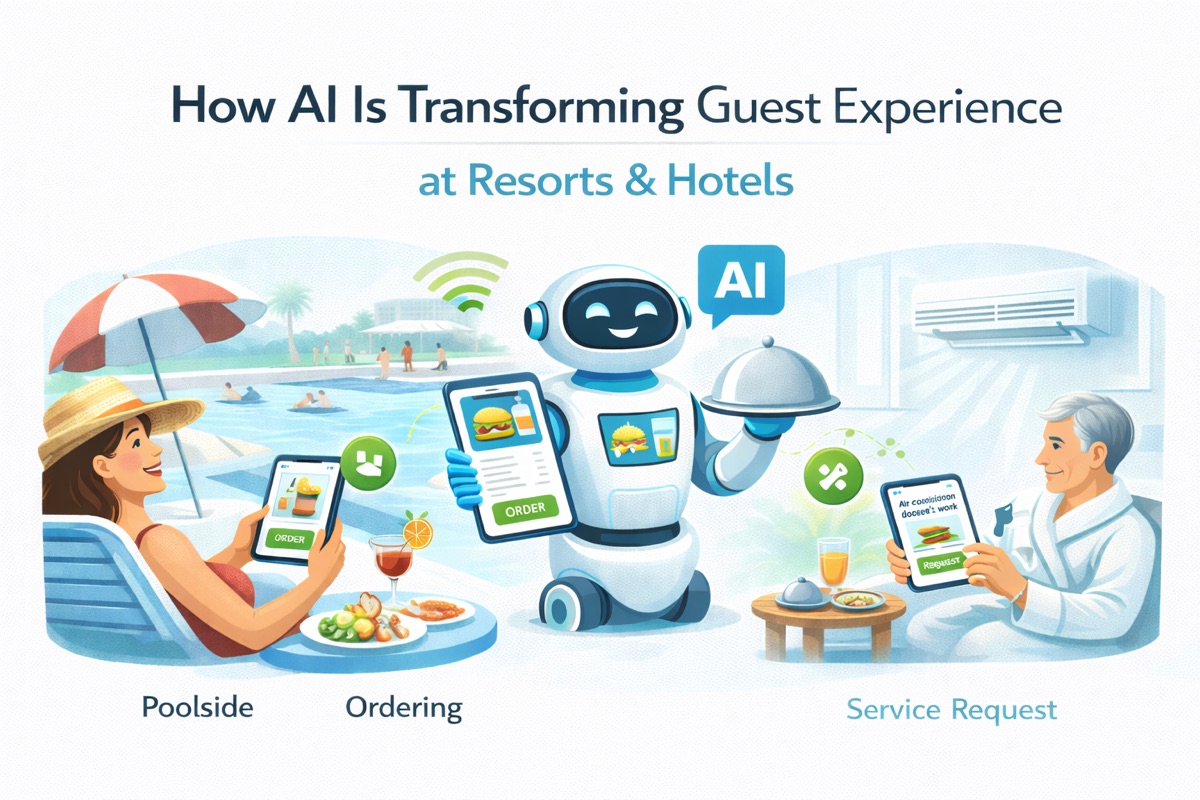
How AI Is Transforming Guest Experience at Resorts & Hotels
From room service to poolside ordering, AI is redefining what guests expect from hospitality. Here's how leading properties are using it.
What Happens When You Give Every Table Its Own AI Captain
A captain per table has always been the gold standard of fine dining. Technology just made it possible at scale — with no uniform, no tip, no bad day.
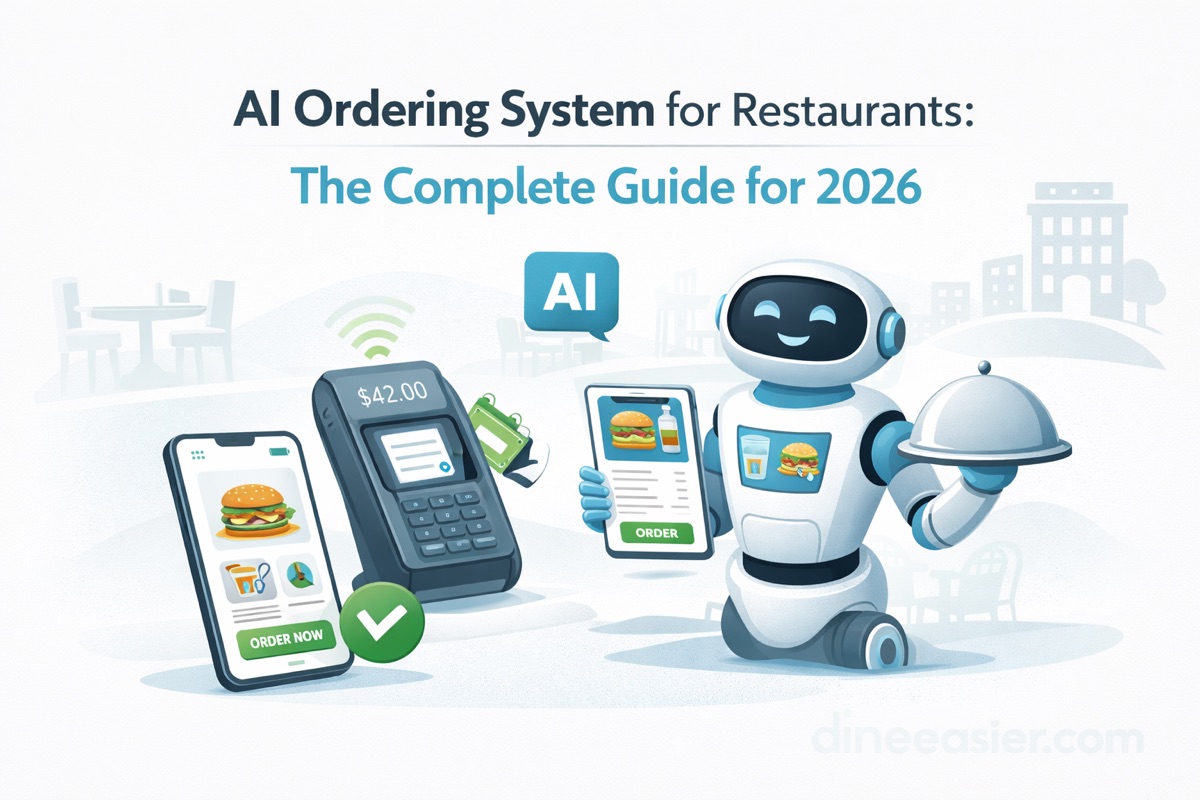
AI Ordering System for Restaurants: The Complete Guide for 2026
Learn how AI-powered ordering systems work, why restaurants are switching, and how to choose the right solution for your business.