Restaurants near a big event worry about covers. Cafes have a simpler and more unforgiving problem: there is a hard ceiling on how many drinks you can make per hour, and no amount of goodwill moves it.
A two-group espresso machine with one confident barista produces somewhere around 60–80 drinks an hour in sustained real conditions — not the number on the spec sheet, the number you actually hit with milk texturing, cleaning and the occasional remake. Add a second barista on the same machine and you might reach 100–120 before you start colliding at the grinder and the steam wands.
Now put a conference across the road with a 45-minute session break, or a festival gate two streets away. Four hundred people want coffee inside ninety minutes.
The maths does not work, and pretending otherwise is how cafes end up with a queue out the door, a thirty-minute wait, and a weekend of one-star reviews earned on their busiest day.
Decide what you are optimising for
You cannot serve everyone. That is not defeatism, it is arithmetic. So choose deliberately:
Maximum throughput — serve the most people possible, accepting a narrower offer and a plainer experience.
Maximum spend per head — serve fewer people, better, at a higher ticket.
Protect the regulars — keep your normal service intact and let the surge go elsewhere.
All three are defensible. The failure mode is not choosing, and drifting into the worst version of all of them: a long queue, a reduced experience and a lower average ticket because everyone ordered the fastest thing.
The throughput plan
Cut the drinks menu hard
Not the food menu — the drinks menu. That is where your ceiling lives.
During peak hours, run a short drinks list built around what your machine makes fastest. In practice that usually means: batch brew or filter as the hero, espresso and a small number of milk drinks, one cold option, and nothing that requires a bespoke build.
The single biggest throughput killer in most cafes is the long tail of low-volume, high-effort drinks. On a normal Tuesday they are a nice point of difference. During a ninety-minute wall they cost you fifteen other customers each.
Batch brew is the most underrated event-day decision there is. A well-made filter coffee served in eight seconds instead of a flat white in ninety changes your ceiling by a multiple, not a percentage. Position it as the recommended option rather than the compromise — put it first on the board with a proper description, not last as an afterthought.
Pre-make what survives being pre-made
Cold brew, iced coffee bases, batch filter, pre-portioned milk jugs, cups pre-lidded and stacked, pastries already bagged. Anything you can move out of the wall and into the two quiet hours before it, move.
Split the counter
The classic cafe failure at peak is one queue that does everything: ordering, payment, drink collection, food, questions. Every slow interaction blocks everyone behind it.
Separate the flows. Order and pay in one place, collect in another. If you have the bodies, a dedicated food-and-pastry point takes the simplest transactions out of the drinks queue entirely.
Put ordering on the customers' phones
This is where QR ordering does something specific for cafes that it does not do for restaurants: it moves the queue off your floor and out of the ninety-minute window.
A customer who orders and pays from the pavement, or from the conference hall across the road, or from their seat, is not standing in your shop occupying space and staff attention. Your baristas make drinks continuously from a queue on a screen rather than in bursts between conversations.
Two things make this work in a cafe specifically:
Pre-ordering with a collection time. If the session break is at 11:00, let people order at 10:40 for 11:05 collection. You have just moved twenty minutes of production before the wall. This is the closest thing to free capacity a cafe can get.
A visible, honest wait time. A customer told "fourteen minutes" who gets their coffee in twelve is happy. The same customer, standing in an unexplained queue for twelve minutes, leaves a bad review. The wait did not change; the information did.
Staff the wall, then send people home
Cafes often run thin all day rather than heavy at the peak. Invert it. Bring people in for the ninety minutes, pay them properly for a short shift, and let them go. A four-hour shift that covers the wall beats an eight-hour shift that spreads the same person thinly across a day that is mostly empty.
Roster a runner whose entire job is restocking cups, lids, milk and pastries so no barista ever leaves the machine. A barista walking to the fridge is the most expensive movement in the building during a wall.
Know what your forecast can and cannot do
If you use demand planning software, be clear about the contract. In FullGuest a demand event is a date window plus a multiplier, and for a first-time event you supply the multiplier — it will not infer from an event's name that Saturday morning is a 4×.
What it does is learn afterwards. Once the dates pass, the platform compares actual demand against your baseline and blends the observed ratio into the stored multiplier, so a recurring event gets more accurate every time it happens.
For cafes this matters more than for most venues, because your events are often recurring and local: a weekly market, a monthly match day, a conference season that returns each year. Those are exactly the cases where the learning loop pays off. Record a rough guess the first time, and by the third occurrence the number is genuinely yours.
That same multiplier should then drive both the rota and the milk-and-bean order, rather than being guessed twice.
Stock: the three things that run out
It is almost always the same three.
Milk. Especially the alternatives. Oat in particular runs out at a rate that surprises people every single time, because event crowds skew younger and order it far more than your regular trade does.
Cups and lids. Unglamorous and genuinely service-ending. Takeaway ratio during an event is wildly higher than normal — a cafe that normally runs 60% dine-in might run 95% takeaway on an event day. Order against that ratio, not your usual one.
Pastries. Gone by 10 AM, and then you have a five-hour wall with nothing to sell alongside the coffee, which quietly halves your average ticket.
Par up narrowly and aggressively on those three. Leave the rest alone.
Protect the regulars
Your regulars are the business fifty-one weeks a year. They will come in during the event, find a queue of strangers, and leave.
Small things that keep them:
- A named regulars' hour before the wall starts
- Let them order ahead and skip the queue entirely
- Tell them in advance that the weekend will be chaotic and when to come instead
The week after a big event is when cafes discover whether they traded their base for a surge. The ones who warned their regulars keep both.
The debrief
Within two days: drinks per hour at the peak, what you ran out of and when, the actual takeaway ratio, the longest wait you served, and how many people you watched walk away from the queue.
That last number is the one nobody records and the one that tells you what next year is worth.
A cafe cannot out-hustle its throughput ceiling. It can raise it — batch brew, pre-orders, a short list, split counters, a runner — and it can be honest with the people it cannot serve. Those two things are the whole playbook.
Related Articles
All-in-One Restaurant Management Software: Stop Paying for 5 Separate Tools (2026)
Most restaurants run on 5+ disconnected apps for ordering, scheduling, SOPs, and bookings. Here is why an all-in-one platform saves money, time, and sanity.
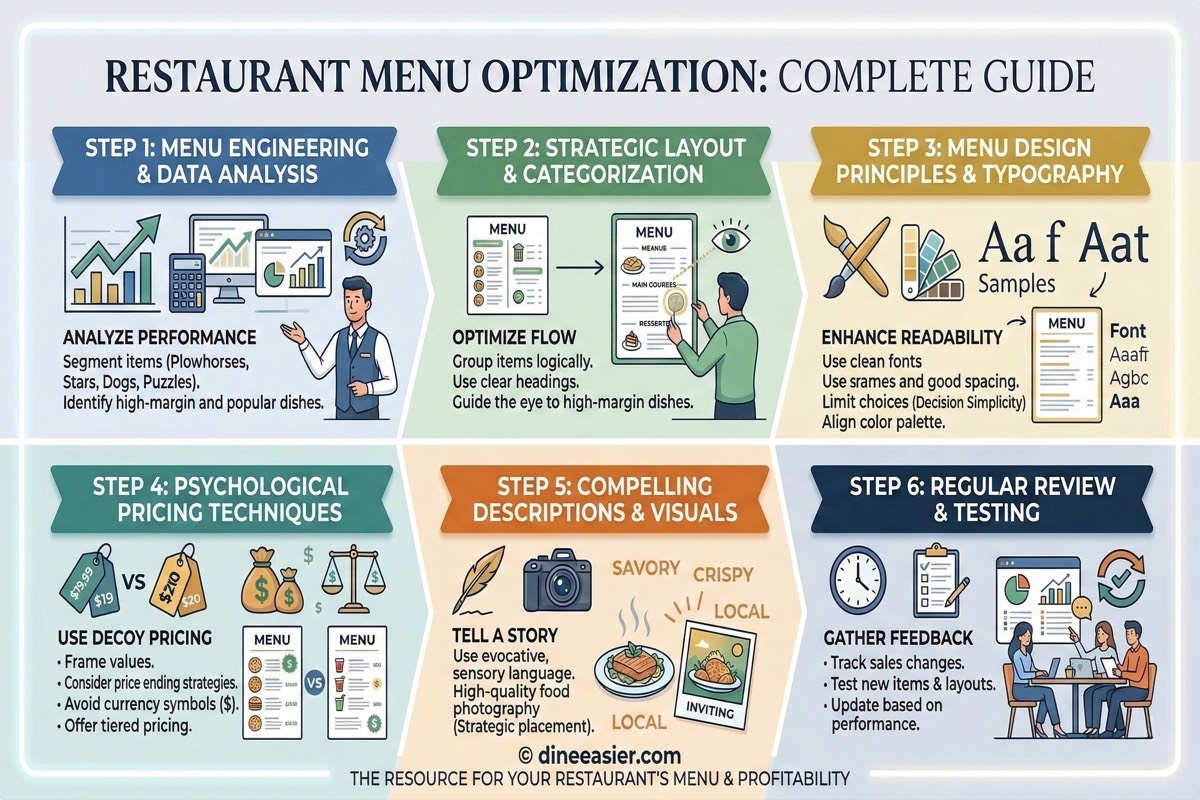
Why Dietary Tags on Your Menu Increase Restaurant Orders
Customers skip menu items they are unsure about. Dietary labels like veg, Jain, vegan, and allergen tags remove doubt, unlock group dining, and directly increase orders per table.
How Many Apps Does Your Restaurant Really Need? The Hidden Cost of Tool Sprawl
The average restaurant now runs 5-8 software subscriptions. Add up the fees, the lost time, and the broken integrations, and tool sprawl is costing you more than you think.