The restaurants that struggle on an event night are rarely the ones that were unprepared. They are usually the ones that prepared for the wrong thing — more covers, spread across the evening, the way a good Saturday looks.
Event demand does not look like a good Saturday. It looks like nothing for four hours and then everything at once.
The wall
Take a festival site that opens at noon and clears at 1 AM. Your night goes like this:
12 PM – 5 PM. Quieter than a normal weekday. Everyone who might have eaten with you is inside the site.
5 PM – 7 PM. A wall. People eating before they go in, all at the same time, all wanting to be somewhere else in forty minutes. Turn expectation is brutal and they will walk if you cannot seat them.
7 PM – 11 PM. Near-dead. This is the window your rota is heaviest for, because it is when a normal Saturday peaks.
11 PM – 1:30 AM. The big one. The site empties and a crowd arrives that is hungry, loud, in large groups, and often drunk. This is frequently more covers than your entire normal evening service, compressed into ninety minutes, at an hour you would normally be cleaning down.
Your weekend average might be up 40%. Your 11:30 PM cover count might be up 400%. Staffing against the average means being overstaffed at 8 PM and drowning at midnight.
The three things that actually fail
One station, not the kitchen. It is almost always the fryer or the grill. Everything else keeps up. That one station goes to a 40-minute quote and drags every ticket in the building with it, because most tickets have at least one item on it.
Fix it at the menu, not the pass: when you design the event-night menu, lay every item against its station and make sure no single station carries more than about a third of expected covers. This is the highest-leverage twenty minutes of planning you will do all week.
One SKU. There is always one thing the crowd for this event wants disproportionately, and it is gone by 9 PM. Sometimes it is obvious; often it is not, and it is the thing that was on your social post. Decide in advance what happens when it runs out — 86 it cleanly, or have a named substitute the floor already knows about. Discovering this at the pass, mid-wall, is how services fall apart.
Order intake. Once the wall hits, your constraint stops being cooking and becomes the number of humans who can get to a table, be understood, and fire a ticket. You can see this from the door: a queue outside while tables inside sit with unopened menus. Adding kitchen staff at this point does nothing at all.
The reduced menu is the whole game
Everything else is optimisation. This is the decision.
For the wall hours, run eight to twelve items. Pick them for throughput and station balance, not for margin or for what you are proud of. Things that hold, plate in one motion, and do not all queue at the same place.
Operators resist this because it feels like offering less. It is not. It is choosing between a short menu served in twelve minutes and a long menu served in fifty, and the second one generates the reviews that outlive the weekend.
Practicalities that make it stick:
- Print it as its own menu. Do not hand people the full menu and verbally restrict it — every table will then have a conversation about what is unavailable, which is exactly the floor time you cannot spare.
- Put it on the digital menu with scheduled availability so the QR menu shows the short list during the wall hours and the full list the rest of the time. The guest sees one coherent offer, not a list of things they cannot have.
- Brief the kitchen on the reduced menu as a different service, not a subset. Different mise, different pass layout, different plating.
Take ordering off the critical path
This is the structural fix for the intake bottleneck, and event nights are where it pays for itself in a single service.
QR ordering decouples order capacity from headcount. Two hundred people can order at once without two hundred conversations. What that buys you is not fewer staff — it is your existing staff running food and clearing instead of standing at tables with a pad.
Two details determine whether it actually works under pressure:
Language. Event crowds are disproportionately out-of-towners and international visitors. The single most expensive floor interaction on an event night is a server explaining six dishes to a table that then orders the first thing they recognised. A menu that answers in the guest's own language deletes that interaction entirely.
Closing the bill. Large drunk groups and split bills at 1 AM is where service time goes to die, and where walked tabs happen. Let people settle and split themselves.
Staff the walls
Split shifts. Everyone hates them and the alternative is worse.
What holds up in practice:
- Strongest people on the wall, not on the open. The instinct to have your best team open the day wastes them on an empty room.
- One person expediting during the wall with no section and no tables. Their entire job is keeping tickets moving.
- A named float per wall for whatever goes wrong. Something will.
- Honest shift caps. A 14-hour double buys you tonight and costs you a resignation in November. Event weekends are where good people decide to leave, and the cost lands two months later where nobody connects it to the festival.
If your rota tool projects labour cost against forecast demand, build until the coverage warnings clear for the wall hours specifically — not until the day looks reasonable.
Tell your forecast the number, once
If you run demand planning software, know what it can infer. In FullGuest a demand event is a date window plus a multiplier, and for a first-time event you supply the multiplier. It will not deduce from the name "City Music Festival" that Saturday is a 3×.
What it does is learn from the outcome. After the dates pass, the platform compares actual demand against your normal baseline and blends the observed ratio into the event's stored multiplier — so next year's occurrence starts from evidence, and each repeat gets closer.
The practical implication for this year: record your guess even if you are unsure of it. A number in the system gets corrected; a number in your head does not. And once it is in, the same multiplier should drive rota coverage and stock reorder rather than being re-derived by hand in two places with two different answers.
Par-up narrowly
Work backwards from the reduced menu. Whatever those eight to twelve items need gets a temporary par increase, plus the one drink this specific crowd drinks. Everything else stays at normal levels.
Scaling every line uniformly ties up cash and produces waste on the Tuesday. The short menu is the point of the short menu — it makes your stock planning tractable too.
Debrief within 48 hours
The weekend ends, everyone sleeps, and the detail evaporates. Before it does, capture: covers per hour against what you predicted, what you ran out of and when, which station backed up and the worst ticket time, who worked which wall and for how long, and the one thing you would change.
Next year the same event produces roughly the same shape. Operators who write this down beat operators who do not, without exception — and if it lives in the system rather than a notebook, next year's rota and reorder inherit it automatically.
The week after
Your covers drop below baseline. Regulars stayed away during the chaos and have not drifted back yet, and your team is running on empty.
Do not schedule a menu launch, a deep clean and a stocktake into the recovery week. Do put something in front of locals, because that week is when you find out whether one enormous weekend cost you your base.
Volume is not the enemy. Shape is. Get the shape, shrink the menu, balance the stations, take ordering off the critical path, and staff the walls — the rest is detail.
Related Articles
All-in-One Restaurant Management Software: Stop Paying for 5 Separate Tools (2026)
Most restaurants run on 5+ disconnected apps for ordering, scheduling, SOPs, and bookings. Here is why an all-in-one platform saves money, time, and sanity.
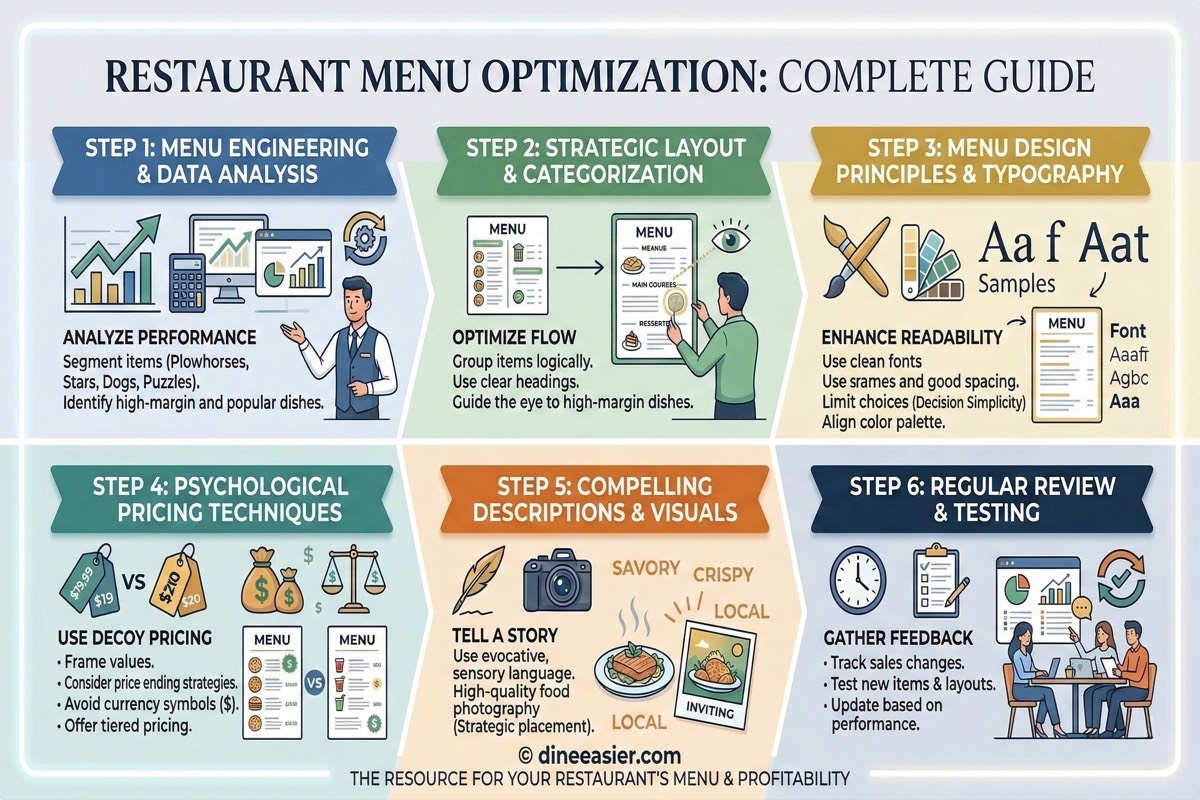
Why Dietary Tags on Your Menu Increase Restaurant Orders
Customers skip menu items they are unsure about. Dietary labels like veg, Jain, vegan, and allergen tags remove doubt, unlock group dining, and directly increase orders per table.
How Many Apps Does Your Restaurant Really Need? The Hidden Cost of Tool Sprawl
The average restaurant now runs 5-8 software subscriptions. Add up the fees, the lost time, and the broken integrations, and tool sprawl is costing you more than you think.